JDSU
OLP-57
The JDSU OLP-57 is a portable optical power meter designed for testing FTTx/PON/BPON/EPON/GPON networks. The JDSU OLP-57 operates at wavelengths of 1310, 1490, and 1550 nm. The JDSU OLP-57 is designed to be inserted into the break of a working network.[1]
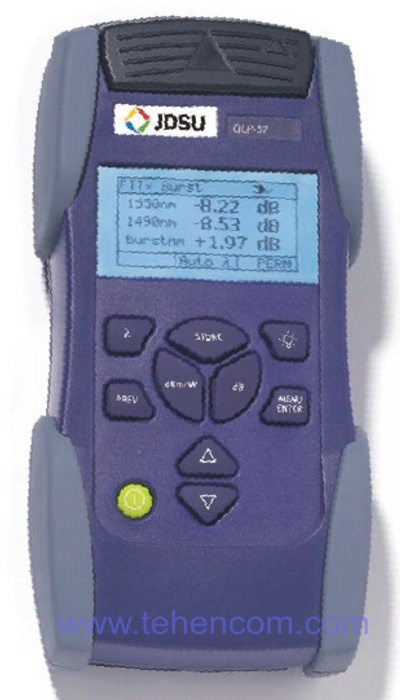
Plate 01JDSU OLP-57 Selective Optical Power Meter
AAATesters.comWatch on YouTube
What it is
The JDSU OLP-57 is a portable optical power meter. The instrument is designed for testing fiber-to-the-x (FTTx) networks, including passive optical networks (PONs) such as BPON, EPON, and GPON. The OLP-57 measures optical power at three specific wavelengths: 1310 nm, 1490 nm, and 1550 nm.[1]
How it works
The JDSU OLP-57 operates by being inserted into the break of a working optical network, a configuration known as in-line or through-mode measurement. The instrument introduces an insertion loss of between 1.5 dB and 2 dB. The power measurement range of the OLP-57 spans from −50 dBm to +26 dBm, depending on the wavelength being measured. The measurement error of the device is between 0.5 dB and 0.8 dB.[1]
What can it run?
Process applications and technology nodes documented for this tool.
- Testing FTTx networks
- Testing PON/BPON/EPON/GPON networks
- In-line insertion into a working network for power measurement
What do the numbers mean?
Optics & imaging8
Configuration & options17
What replaced it?
Related models
- siblingJDSU OLP-55— Listed alongside the OLP-57 as another portable optical power meter.source[1]
Where are the manuals?
Generated from public-source data on file. Enter your email to access — nothing is published; details are routed privately.
Not publicly documented
Field notes
No research found yet — worked with this tool? Share what you know.
Frequently asked questions
What optical wavelengths does the JDSU OLP-57 measure?
The JDSU OLP-57 measures wavelengths of 1310 nm, 1490 nm, and 1550 nm.[1]
What is the insertion loss of the JDSU OLP-57 when placed in the network?
The insertion loss of the JDSU OLP-57 is between 1.5 dB and 2 dB.[1]
What is the power measurement range of the JDSU OLP-57?
The power measurement range of the JDSU OLP-57 is −50 dBm to +26 dBm, depending on the wavelength.[1]
What is the measurement error of the JDSU OLP-57?
The measurement error of the JDSU OLP-57 is between 0.5 dB and 0.8 dB.[1]
For which types of networks is the JDSU OLP-57 designed?
The JDSU OLP-57 is designed for testing FTTx networks, including BPON, EPON, and GPON networks.[1]
Not publicly documented
The following facts about the OLP-57 are absent from this record as of this revision. First-hand knowledge or a citation closes a gap; every submission is reviewed before publication.
No publicly documented production dates or lifecycle milestones (introduction, end of production, EOL) for the OLP-57 are on record.
Answerable by: OEM historical records or a trade-press announcement
No publicly documented variants, configuration options, or revision breakpoints of the OLP-57 are on record.
Answerable by: an OEM product catalog or an engineer who ordered or specified the tool
The control-system platform and OS era of the OLP-57 are not on record.
Answerable by: an engineer who operated it or OEM installation records
No publicly documented failure modes or field errata for the OLP-57 are on record.
Answerable by: a field service engineer, process engineer, or maintenance technician
The process node or technology generation of the OLP-57 is not on record.
Answerable by: an OEM datasheet or a fab qualification report
No research found yet — worked with this tool? Share what you know.
Sources & citations
Sources (1)Every fact above is drawn from these public sources
- [1]tehencom.com — tehencom.comtehencom.com
Last updated Oct 8, 2026.
Compare with similar tools
View all →

The Perkin Elmer 1050 UV-VIS Spectrometer is an instrument used for analyzing ultraviolet and visible light absorption spectra.
The Agilent 11980 A is a fiber optic interferometer for precision optical measurements.